
Originally Posted On: https://www.ucanpack.com/blog/post/which-products-ship-best-in-custom-printed-pouches-instead-of-boxes
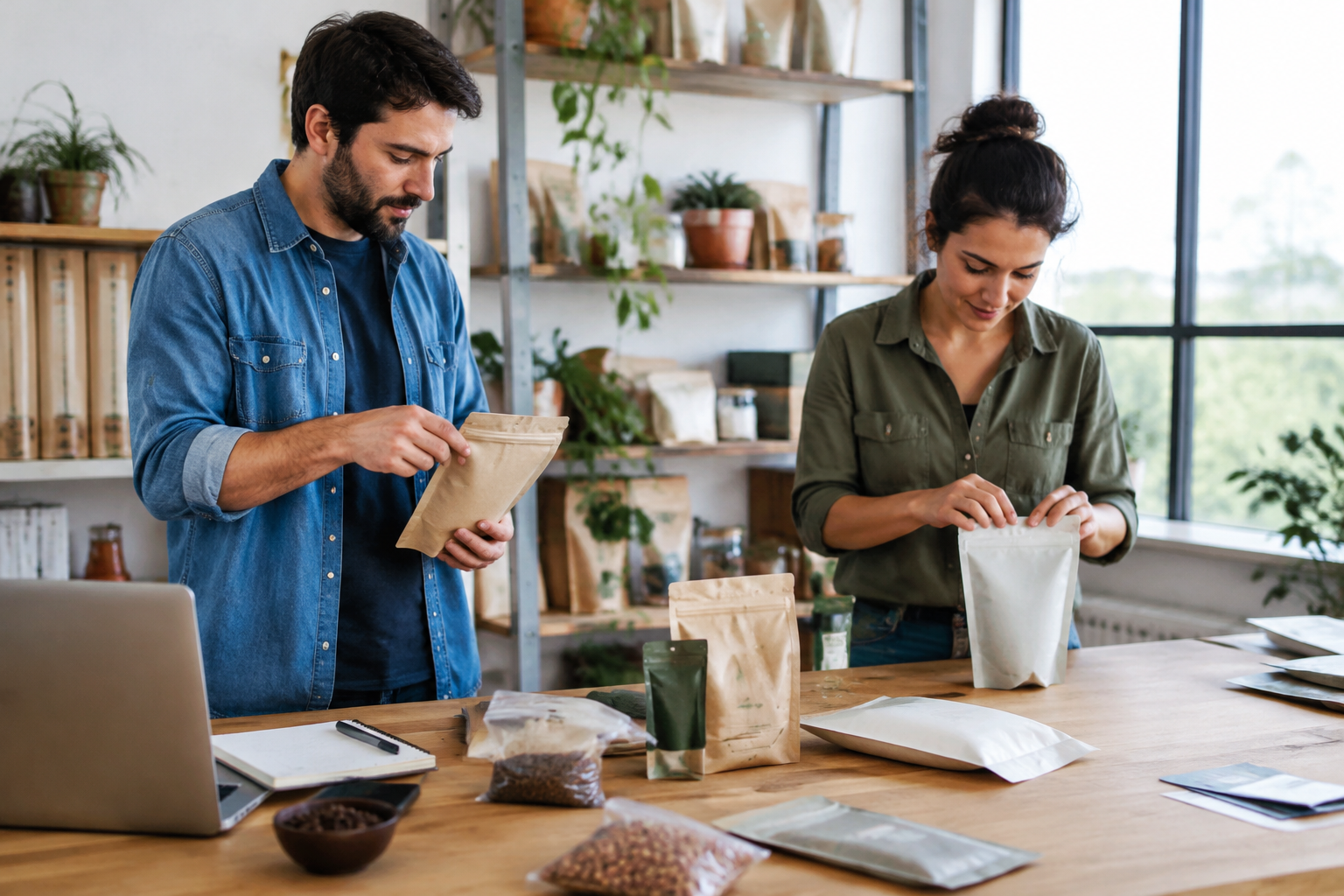
A box is dead weight for most dry goods.
Coffee, granola, jerky, spices? They don't crush, they don't leak, and they sure don't need a rigid cardboard shell to survive the mail. That's why custom printed pouches are replacing boxes for so many small food brands, and why the shift makes sense for a founder with a tight launch budget.
Pouches ship flat, weigh next to nothing, and slide into a poly mailer. They're also easier to test. Digital printing means you can run a small batch of a new flavor without paying a $500 to $2,000 plate or die fee first. Sounds good, right?
But here's the thing. Not every product belongs in a pouch. Some foods still need a box, and picking wrong costs you in crushed product and angry reviews. So which ones go where?
Why Are More Small Food Brands Skipping Boxes for Custom Printed Pouches?
A founder ships 40 bags of single-origin coffee on a Monday. Each one sits in a printed carton, packed in a bigger shipping box — the whole thing weighs three times what the beans do. Sound familiar? That's dead weight.
For dry goods, a box often adds bulk and nothing else. Custom printed pouches ship flat, weigh less, and slide into a poly mailer. The printed film is the brand, the barrier, and the shelf display in one piece.
This is written for founders selling coffee, granola, snacks, or spices who want to test a product without paying plate or die fees. Low minimums make that doable.
Here's the short preview.
Ships best in pouches: whole bean and ground coffee, granola, trail mix, jerky, dried fruit, and spice blends. Still needs a box: fragile crackers, gift sets, and anything that crushes. Even then, a box is a different job. For those cases, custom fie-cut boxes are the better fit.
What Products Ship Best in Custom Printed Stand Up Pouches?
Dry, shelf-stable foods win. Coffee beans, granola, spices, jerky, trail mix, and snacks all ship well in custom printed product pouches because they don't crush, don't leak, and need a barrier film more than a rigid shell. A laminated film does the protecting. A box just adds weight and dimensional shipping charges.
Fragile items are different. Glass jars or delicate crackers still belong in custom size die-cut boxes.
Coffee and Tea in Custom Stand-Up Pouches
Coffee is the classic fit. Fresh roasted beans release gas, so a one-way degassing valve lets CO2 out without letting oxygen in. Pair it with a flat bottom for shelf stability and a zipper for resealing. Oxygen barrier matters here, since stale coffee is the fastest way to lose a repeat customer (and a review).
-
12 oz: the standard retail bag for whole bean
-
5 lb: wholesale and café refills
Granola, Snacks, and Spices in Custom Zipper Pouches
Granola goes soft fast. A press-to-close zipper keeps it crisp after the first scoop. A clear window lets shoppers see the clusters, which sells better than any photo on the front.
Spices are the best test product. Start with 2 oz to 4 oz pouches, run a small batch, and see what moves before committing to bigger sizes. Low minimums make that cheap to try. Why gamble on thousands of units when a few hundred will tell you the same thing?
Why Do Custom Pouches Ship Cheaper Than Boxes?
Ever opened a shipping invoice and wondered why a bag of granola costs more to mail than it does to make? Boxes are usually the culprit. Pouches fix most of that.
The short answer: they're light, they ship flat, and they rarely trigger dimensional weight surcharges. A filled 8 oz coffee pouch is thin and predictable. A box for the same product carries air, and carriers bill for air.
Storage and Fewer Parts
Empty pouches are flat. Several thousand fit in one carton, while boxes eat a garage. For a small startup, that matters. Custom printed shipping puches also cut the parts list: no inserts, no void fill, no extra tape. Fill, seal, label, mail.
-
Lighter: less film than corrugated, so less weight per unit.
-
Flat-packed: one small carton holds a full launch run.
-
Fewer steps: a zipper or heat seal replaces tape and padding.
Where a Pouch Inside a Mailer Still Wins
Here's the honest take. A bare pouch isn't a shipping container. Spices, granola, and coffee in laminated pouches with a zipper travel well, but sharp corners and crushing happen. Slip the pouch into a poly mailer, and you get protection at a fraction of a rigid box's weight. Many founders pair their pouches with shipping bags for exactly that reason.
Rigid boxes still make sense for fragile glass or gift sets. For dry goods, though? Pouches win.
Which Products Still Need a Box (and When to Pair Both)?
Roughly 1 in 4 bags of crackers or chips arrive with crushed contents when shipped loose in a pouch. That's a hard number to ignore. Pouches protect against moisture and light, but they don't stop a squeeze.
What Products Still Need a Box?
Fragile items need rigid walls. Think crackers, chips, and delicate cookies. Gift sets and subscription kits belong in a box too, since several items have to travel together and look good on arrival. Coffee, granola, and spices? Those ship fine in custom printed pouches alone.
How Do You Pair Pouches With a Box?
The hybrid approach works best for premium unboxing. Slide two or three stand-up pouches into a mailer, add a paper insert — you've got a retail-ready kit. Founders who want branded outer packaging can order custom printed shipping boxes in small runs. Single-pouch orders with no crush risk can go out in polythene mailing bags to save on postage and weight.
Quick Checklist: Pouch, Box, or Both?
-
Crush risk: If the product breaks under light pressure, add a box.
-
Moisture sensitivity: A laminated or aluminum-lined pouch handles this. Keep it inside the box for extra cover.
-
Retail shelf needs: Pouches with a zipper and window hang or stand fine. Cartons suit shelves that demand rigid facing.
-
Gifting: Multi-item sets almost always need a box.
Two or more checks? Pair both.
Can I Order Custom Printed Pouches in Low Minimums Without Plate or Die Fees?
Here's a myth worth killing: you don't need a five-figure run to get branded pouches. Yes, you can. Digital printing skips plates and dies, so small runs of custom printed pouches are realistic for launches and flavor tests. Need shipping cartons too? Look at custom size boxes, and for soft goods, poly bags for shipping work well.
How to Pick Size, Material, and Features
Start with fill weight. A 4 oz spice jar swap and a 12 oz coffee bag need very different pouches. Then decide on these:
-
Film layers: laminated film gives strength and a clean print surface.
-
Barrier: aluminum foil blocks oxygen and light (best for coffee). Kraft looks natural but needs a liner.
-
Finish: matte feels premium; gloss makes colors pop.
-
Extras: zipper, tear notch, and a window so shoppers see the granola.
Order a free sample first. It costs you nothing, and holding the pouch beats guessing.
How to Order: Template, Artwork, Proof, and Production
-
Download the pouch template.
-
Place your label and design inside the safe zones.
-
Approve the digital proof.
-
Wait for production, then shipping.
Common artwork mistakes? Low-resolution files (aim for 300 dpi), text crowding the seams, and ignoring the zipper area. Fix those and proofs go smoothly.
Not sure yet? Try an online design tool or request samples before committing to a full run.
Boxes aren't the default for dry food anymore. For a founder selling coffee, granola, spices, or snacks, a well-built pouch does the same job with less weight and less hassle. It protects the product, carries the brand, and slides into a poly mailer.
Not everything belongs in one, though. Crushable items and gift sets still need a rigid shell, and a pouch tucked inside a mailer box often gives a small brand the best of both. Matching the package to the product keeps damage claims low and shipping lean.
The old barrier to entry has also shifted.
Digital printing means small runs of custom printed pouches no longer come with plate or die fees, so a launch or a flavor test doesn't have to wait on a big budget.
Here's the next step.
Measure your fill weight, pick a barrier film that suits the product, and order a free sample to test the fit and zipper with your real product. Then open the online design tool, drop your artwork into the template, and approve a digital proof. Ship a test batch this month.
UCANPACK
753A Tucker Rd
Winder, GA 30680
1 201-975-6272
https://ucanpack.com


