
Originally Posted On: https://www.ucanpack.com/blog/post/8-signs-your-shipping-boxes-are-undersized-for-the-products-inside
Top Picks at a Glance
-
Product wedged in at an angle — forced fit stresses corners and seams
-
Box bulges or bows out — walls under pressure crack in transit
-
Cutter needed to close flaps — forced closures break tape seals
-
Crushed or cracked deliveries — customer complaints spike fast
-
Duct-taping or double-boxing — a costly workaround, not a fix
-
Rising damage claims and returns — undersizing quietly eats margin
-
Product rattles despite filler — wrong dimensions, not lack of padding
-
Same box sizes, new product line — time to reorder in updated sizes
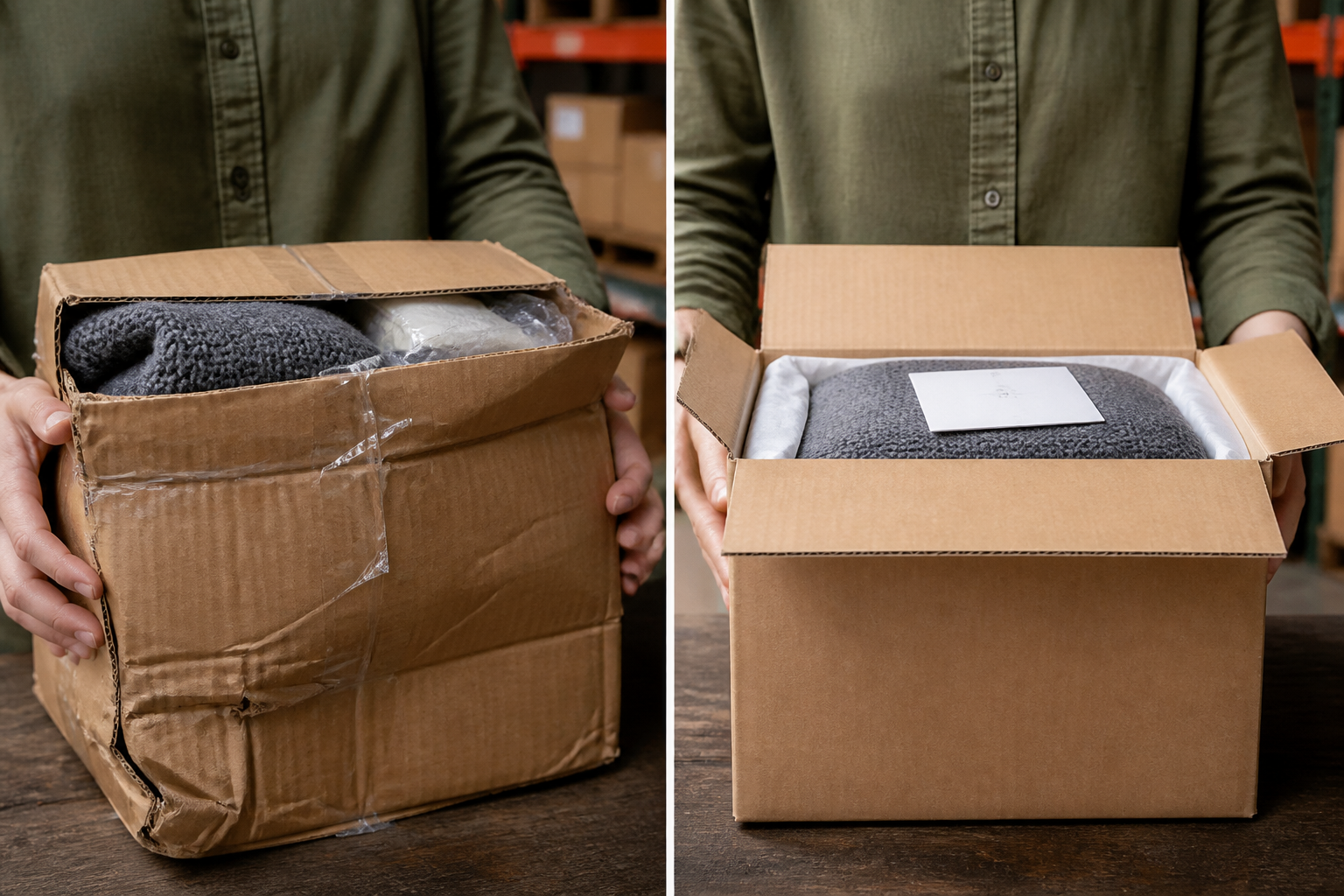
Here's an uncomfortable number: a big chunk of damage claims trace back to boxes that were simply too small for what went inside them. Not weak boxes. Not rough carriers. Just shipping boxes squeezed a size too tight, forcing seams to strain — corners to give way somewhere between the warehouse and the front porch.
Most sellers blame the shipping carrier when a customer photo shows a crushed corner. But drop tests and stacking pressure don't create damage out of nowhere — they expose whatever weakness was already built into the packaging. And a box that's fighting to contain its contents is already compromised before it even leaves the building.
If you've noticed tape splitting, corners bulging, or return rates creeping up month after month, the box itself is probably the problem — not your product, not your carrier, not bad luck. Here are eight signs your current box size is working against you, and what right-sizing actually looks like once you stop guessing.
Intro: Why Box Size Is Quietly Wrecking Your Damage Rate
A seller packs 300 orders a week into the same box she's used for two years — then notices dented corners showing up in return photos every single month. She's not doing anything wrong on the packing line. Her shipping boxes just stopped matching what's inside them as her product line grew. That gap between box and product is where damage claims live.
The math behind small shipping boxes and product damage claims
Here's the blunt version: when a product presses against all six walls of a box, there's zero cushion room left. No air gap means no shock absorption — the box takes the hit, then the product does. Add rigid inserts like color cardboard sheets for dividers, and you've made a tight box even tighter. Run the numbers on 500 monthly orders at a 4% damage rate versus 1%, and that difference is real replacement cost eating your margin every single week.
1. Your Product Doesn't Sit Flat — It's Wedged in at an Angle
What a forced fit does to corners and seams during transit
A box that won't let your product lie flat is already failing at its one job. When items get shoved in diagonally, the corrugated walls bear pressure they weren't built to handle, and that stress finds the weakest seam first. Drop-test data from carriers consistently shows angled loads fail at corners 3-4 times more often than properly seated ones.
Here's what most sellers miss: a tight diagonal fit isn't a size that's "close enough" — it's a box that's actively working against your product. If you're packing anything rectangular or boxed, switch to small shipping boxes sized to the product's actual footprint, not the nearest size you had on hand.
Soft goods have their own version of this problem. If you're shipping flexible items that still get crammed sideways, custom printed pouches solve the angle issue entirely since there's no rigid shape to force.
2. The Box Bulges or Bows Out on the Sides
Ever picked up a box that looked more like a barrel than a rectangle? That's a bulge — and it means the contents are fighting the walls for space. Corrugated walls are engineered to sit flat under load; once they bow, the edge crush strength drops fast, and stacking becomes a real risk in transit or on a truck.
This shows up most with orders that outgrow their original packaging. If you're regularly cramming multi-item orders or oversized products into containers that used to fit, it's time to size up. large shipping boxes give products room to sit without pressure on the seams, which matters for both damage rates and how the package survives a warehouse conveyor belt.
Softer goods aren't off the hook either. Overstuffed large poly mailer bags stretch thin at the seams and split before delivery. Bulging is a warning sign — don't ignore it.
3. You're Using a Utility Knife or Box Cutter Just to Close the Flaps
Roughly 1 in 5 damage claims filed by online sellers trace back to a seal that failed before the truck even left the dock, according to carrier loss reports. If closing a box requires a blade instead of a hand, the box is too small — full stop.
Why forced closures crack tape seals mid-shipment
When flaps won't meet without a fight, tape gets stretched thin at the exact spot where it needs to hold strongest. That stretch weakens the adhesive bond, and one bump on a conveyor belt is enough to pop it open. Sellers who source custom printed mailer boxes sized correctly for their product skip this problem entirely — flaps close flat, tape lies smooth, and seams hold under real shipping pressure. If your packer needs both hands and a blade to force a lid shut, that's not a packing skill issue. It's a box-size problem, and it's costing you in damage claims.
4. Customers Report Items Arriving Crushed, Dented, or Cracked
Here's a myth worth killing: crushed corners and dented lids aren't random shipping bad luck. They're almost always a sizing problem, not a handling problem. When products sit loose inside shipping boxes with too much empty space, the walls flex under stacking weight instead of the product bearing its own load properly.
Look at your damage reports. If dents cluster on the same panel every time — that's not carrier roughness, that's a box too big for what's inside.
Cracked corners are a different tell.
They usually mean the box was crushed from above because there wasn't enough internal support keeping the shape rigid. Switching to snugger-fitting large mailers for lighter items, or a properly sized corrugated box for heavier goods, fixes this fast. Don't just add more tape. Tape doesn't fix geometry problems.
5. You're Duct-Taping or Double-Boxing to Compensate
A seller ships a countertop appliance that keeps splitting the bottom seam. Instead of sizing up, someone on the floor starts wrapping the whole thing in a second layer of tape — then a second box. That's a warning sign, not a fix.
Real cost of makeshift fixes vs. right-sized shipping boxes near me options
Double-boxing adds material cost, labor minutes per order, and dimensional weight charges that eat margin fast. It also slows down packing lines when volume spikes. Run the math: extra tape rolls, a second carton, and 90 seconds of added labor per package add up quickly across a few hundred monthly orders.
The smarter move is switching to properly sized cartons before damage rates or duct tape become the norm. For sellers stocking multiple SKUs, buying mailer boxes wholesale keeps unit costs down while giving each product its own correctly sized home — no reinforcement tricks required. If your packing team reaches for a second box more than once a week, that's your sign to resize.
6. Your Damage Claims and Return Rate Are Climbing Month Over Month
Rising damage claims are the clearest sign your shipping boxes don't fit what's inside. When product shifts and crushes against thin corrugated, customers file returns instead of reorders — and that hits your margin twice, once on the refund and once on replacement freight.
How undersized boxes compare to oversized boxes on total shipping cost
Undersized boxes look cheap on paper but cost more once claims pile up. Oversized boxes waste dimensional weight fees and packing material, but they rarely cause the same failure rate. Here's the real comparison: a box that's too tight forces you to skip cushioning entirely, so the product takes the impact directly. That's how a $12 order turns into a $40 loss after return shipping and a replacement unit.
For soft goods and apparel where fit matters less structurally, switching to properly sized colored poly mailer bags often cuts both cost and claims at once.
7. Products Shift and Rattle Even With Extra Packing Materials Stuffed In
Ever shaken a box before taping it shut and heard something knock around inside? That's your product telling you the container is too big for the job — not too small, but the wrong shipping boxes for the item's actual footprint. Extra void fill isn't a fix; it's a band-aid on a sizing problem. When you're piling in paper, air pillows, and packing peanuts just to stop movement, the box has too much empty volume and the item still has room to travel and collide with the walls during transit.
For smaller or delicate items — jewelry, cosmetics, phone accessories — swapping to a tighter-fitting container often solves this instantly. If you're shipping something soft or semi-rigid that doesn't need full corrugated protection, colored bubble mailers give you a snug, cushioned fit without the rattle. Match the container to the product, not the other way around.
8. Your Box Sizes Haven't Changed Even Though Your Product Line Has
Roughly 65% of sellers add new SKUs every year, yet a lot of them keep reordering the same box dimensions they bought three years ago. That's a problem. If your catalog has grown from one flagship item to a dozen variants, one box size can't fit them all without wasted void space or crushed corners.
Signs it's time to reorder wholesale shipping boxes in updated sizes
Here's what to watch for: multiple SKUs shipping in the same box despite different weights, staff manually adding extra tape or padding on certain orders, or a spike in returns tied to one product category. If you've branched into soft goods or gift sets, pairing right-sized boxes with colorful shipping bags for lighter items can cut costs and improve presentation at once. Review your box mix every quarter — not once a year — and reorder in the sizes your current lineup actually needs, not the ones sitting in your storage room.
How to Right-Size Your Shipping Boxes Before Your Next Bulk Order
Here's a myth worth killing: bigger boxes don't mean safer shipments. More empty space just means more room for products to slide, spin, and crash into corners during transit. Right-sizing isn't optional — it's math.
Measuring your product correctly for small, large, and extra-large shipping boxes
Measure length, width, and height at the product's widest points, then add 1-2 inches per side for cushioning. That's it for small items. For large or extra large orders, add an extra inch of clearance for filler material — bubble wrap or crinkle paper needs room to actually work, not just sit flat against the sides.
Why ordering free samples beats guessing on box dimensions
Guessing costs money. Test a handful of sizes against your actual inventory before committing to a pallet. It's also worth noting that soft goods sold in custom printed product pouches often need a different sizing approach entirely — flexible packaging shifts inside rigid boxes if there's excess space.
Eight signs, one root cause: boxes that don't match what's inside them. A wedged product, a bulging side wall, a knife instead of tape — none of these are packaging quirks. They're warning labels, and ignoring them is what turns a 2% damage rate into a 9% one. Sellers who fix the fit before scaling their order volume are the ones who stop bleeding margin on returns and replacement shipments.
Fixing this doesn't require guesswork.
Measure your product's actual dimensions, add the right amount of cushioning room — match that number against real box specs — not whatever size happens to be sitting in the storage room. Ucanpack's shipping boxes come in hundreds of size options built with proper flute strength for the load they're carrying, and free samples let you test fit against your actual product before committing to a bulk run. That's the difference between packaging that protects your margins and packaging that quietly drains them.
Pull your current box dimensions, compare them to your product's real measurements, and order samples in the next size up or down. It takes twenty minutes and saves months of damage claims.
UCANPACK
753A Tucker Rd
Winder, GA 30680
1 201-975-6272
https://ucanpack.com


