A Health-Focused Guide to Mold Remediation in Florida by American Family Bioclean
Lakeland, United States – June 3, 2026 / Moving Service Marketing Company /
Mold problems are common in Florida due to its warm temperatures, frequent rainfall, and high humidity. While mold may begin as a small discoloration on a wall, ceiling, or floor, it can quickly spread into hidden areas of a property if the underlying moisture issue is not addressed. Beyond damaging building materials, mold can affect indoor air quality and create concerns for people who spend time inside the home or business. Because mold often grows in hard-to-see areas, successful remediation requires more than simply cleaning visible surfaces.
A health-focused remediation process aims to identify the source of the problem, safely remove contamination, and restore indoor conditions that support a healthier environment. Professional remediation specialists use specialized equipment, proven cleaning methods, and containment procedures to prevent mold spores from spreading during cleanup. This approach helps protect both occupants and technicians while ensuring the problem is handled thoroughly. In this guide, American Family Bioclean explains its health-first approach to mold remediation in Florida and highlights the inspection, remediation, air-quality restoration, and prevention strategies that deliver long-term results.
American Family Bioclean’s Health-First Approach
American Family Bioclean understands that mold remediation is about much more than removing visible growth. Mold can affect indoor air quality, spread through airborne spores, and continue growing if moisture problems remain unresolved. For this reason, the company follows a health-first approach that focuses on identifying sources of contamination, protecting occupants, and creating safer indoor environments. Every project begins with a detailed assessment that helps technicians understand the full extent of the issue before any cleaning or removal work takes place.
During the initial inspection, technicians evaluate moisture levels, ventilation conditions, and areas where mold may be hidden from view. Moisture meters and other diagnostic tools help locate moisture behind walls, beneath flooring, and in other concealed spaces. By gathering accurate information before remediation begins, the team can create a targeted plan that addresses affected areas while minimizing disruption to the property. This careful process also helps reduce the likelihood of spores spreading throughout the building during remediation activities.
One important recommendation from experienced remediation professionals is to pay attention to early warning signs. Small dark spots on walls, peeling paint, water stains, or persistent musty odors can indicate hidden mold growth. While these issues may appear minor at first, they often signal moisture problems that can become more serious if left unchecked. Early detection allows remediation efforts to begin before contamination spreads into larger sections of the property, reducing both damage and restoration costs.
Another key element of American Family Bioclean’s approach is the use of EPA-approved cleaning products that eliminate mold and support a healthier indoor environment. The company selects products that are effective against mold growth without leaving behind unnecessary chemical residues. This is particularly important for households with children, older adults, pets, or individuals who may be sensitive to strong cleaning chemicals. By choosing safer products, the remediation process can address contamination while reducing additional indoor air concerns.
Their cleaning protocol includes:
-
Environmentally responsible biocides designed to eliminate mold growth
-
Non-corrosive cleaning solutions that help preserve building materials
-
Products with low chemical emissions that support healthier indoor air quality
These products allow technicians to clean and disinfect affected areas without causing unnecessary damage to surfaces. In comparison, some household cleaning products may only remove surface discoloration, leaving mold spores behind and allowing the problem to return over time. Professional-grade solutions are selected specifically to address contamination more effectively.
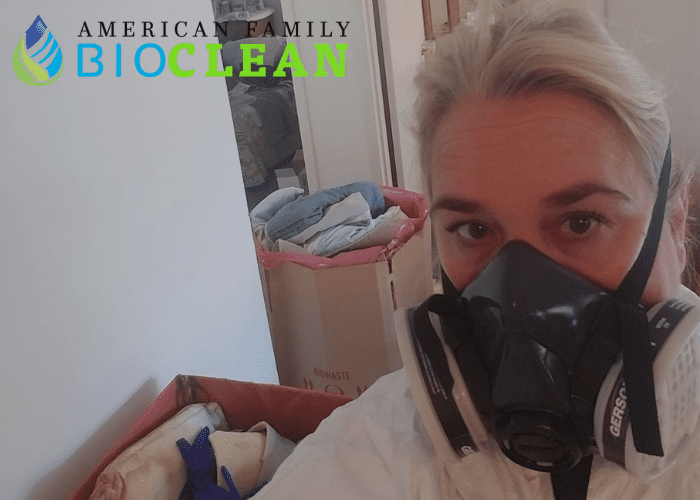
Protective equipment also plays an essential role in maintaining a safe remediation environment. American Family Bioclean technicians wear HEPA-filtered respirators, protective suits, gloves, and eye protection while working in contaminated areas. This equipment helps reduce exposure to mold spores and prevents technicians from carrying contamination into unaffected sections of the property. Safety procedures are designed to protect everyone involved in the remediation process.
Containment measures are equally important. Affected areas are isolated with plastic barriers, while negative air machines equipped with HEPA filters help control airborne spores. These systems create controlled airflow that prevents contamination from spreading into clean areas of the building. By combining inspection, containment, protective equipment, and specialized cleaning methods, American Family Bioclean approaches mold remediation as a complete environmental restoration process rather than a simple cleaning project.
Comprehensive Mold Inspection
A successful remediation project starts with a thorough inspection. Before any cleanup begins, American Family Bioclean evaluates the property to determine the extent of mold contamination and identify the conditions that support its growth. Visible signs such as discoloration, water stains, damaged drywall, and musty odors often provide valuable clues, but mold can develop in concealed spaces that are not visible during a basic visual assessment. Because of this, inspections involve much more than simply looking for visible mold.
Technicians use specialized moisture detection equipment to identify hidden areas of concern. Moisture meters measure the amount of water present within building materials, helping inspectors locate damp areas behind walls, beneath flooring, and inside ceilings. Since mold requires moisture to survive and spread, identifying these moisture sources is critical. Even when surfaces appear dry, elevated moisture readings can indicate conditions that support hidden mold growth. Detecting these issues early allows remediation plans to address both contamination and its contributing factors.
1. Mold Sampling
When mold growth is suspected, technicians may collect samples from affected areas for laboratory analysis. These samples are sent to accredited laboratories where specialists identify the mold species present and evaluate contamination levels. This process removes uncertainty and provides objective data about the nature of the problem. Certain mold types may require specific remediation methods, making accurate identification an important part of the overall strategy.
Once laboratory testing is complete, American Family Bioclean prepares a detailed report outlining inspection findings, moisture conditions, mold locations, and recommended remediation procedures. This information helps property owners understand the scope of the issue and supports the development of an effective remediation plan. Having clear documentation also assists with property management decisions and may be useful when coordinating repairs or insurance-related discussions.
2. Air Quality Testing
Air quality testing provides another important layer of information during the inspection process. Mold spores often become airborne and travel throughout a building, affecting indoor air even when visible mold growth is limited. By collecting air samples from various areas of the property, technicians can measure spore concentrations and compare indoor conditions to normal outdoor levels. Elevated spore counts may indicate hidden contamination that requires further investigation.
Air testing also serves as a valuable tool during and after remediation. Initial readings help establish baseline conditions, while follow-up testing can verify whether remediation efforts successfully reduced airborne contamination. Factors such as humidity, ventilation, and daily activity levels can influence indoor spore counts, underscoring the importance of air quality testing as an important component of a comprehensive assessment. By combining visual inspections, moisture detection, sampling, and air analysis, American Family Bioclean gains a complete understanding of contamination before remediation begins.
Effective Remediation Techniques
The remediation process begins with containment. Before any mold removal activities occur, technicians isolate affected areas using plastic barriers and controlled work zones. These containment systems help prevent mold spores from spreading into clean sections of the property while remediation is underway. Negative air pressure equipment is often used to direct contaminated air through HEPA filtration systems, creating a controlled environment that reduces the risk of cross-contamination.
Additional safety measures may include decontamination chambers positioned near containment areas. These controlled entry and exit points allow technicians to remove or replace protective equipment before leaving the work zone. Such procedures help limit spore movement and maintain the effectiveness of the containment system throughout the project. These preparations may seem extensive, but they are essential for controlling contamination and protecting indoor air quality during cleanup.
After containment has been established, attention turns to materials that cannot be restored. Mold often penetrates porous materials such as drywall, insulation, carpeting, and ceiling tiles. When contamination becomes extensive, cleaning alone may not be sufficient to eliminate the problem. In these situations, affected materials are carefully removed and disposed of in accordance with industry standards. Removing heavily contaminated materials helps eliminate active growth and reduces the likelihood of future mold recurrence.
The removal process requires specialized tools and safety procedures. Technicians work carefully to avoid disturbing mold colonies in ways that could release large numbers of spores into the air. Protective equipment and containment systems remain in place throughout this stage to maintain control over the remediation environment. Once unsalvageable materials have been removed, attention shifts toward cleaning and restoring remaining surfaces.
Non-porous and semi-porous surfaces are cleaned using techniques designed to thoroughly remove contamination. HEPA vacuuming captures loose spores and debris, while specialized brushes and cleaning solutions help remove mold growth from affected surfaces. Following physical cleaning, antimicrobial treatments may be applied to help eliminate remaining spores and discourage future growth. Every step is performed carefully to ensure hidden contamination is addressed rather than simply covered up or treated cosmetically.
The overall goal is not merely to improve appearance but to create a cleaner and safer environment. Effective remediation combines containment, material removal, cleaning, and disinfection into a coordinated process that addresses contamination at its source. By following these procedures, American Family Bioclean works to restore both property conditions and indoor environmental quality.
Expert Technicians and Solutions
Professional mold remediation depends heavily on the knowledge and training of the technicians performing the work. American Family Bioclean employs professionals who receive specialized training and certifications that support industry best practices. Their understanding of mold behavior, moisture intrusion, building materials, and remediation procedures enables them to accurately evaluate each situation and select appropriate solutions tailored to the property’s specific needs.
Technology also plays an important role in improving remediation outcomes. Infrared imaging equipment helps identify hidden moisture behind walls, under flooring, and inside ceilings without requiring unnecessary demolition. By accurately locating moisture sources, technicians can focus remediation efforts where they are needed most while minimizing disruption to unaffected areas of the property. This targeted approach improves efficiency and helps preserve structural materials whenever possible.
HEPA filtration equipment is another essential component of the remediation process. HEPA vacuums and air filtration systems are designed to capture extremely small particles, including mold spores that may remain suspended in the air during cleanup activities. Combined with negative air machines, these systems help improve air quality while reducing the risk of contamination spreading beyond the work area. Effective filtration supports both worker safety and occupant protection throughout the project.
The combination of skilled technicians and advanced equipment enables American Family Bioclean to adapt remediation strategies to changing site conditions. Whether addressing contamination within a residential home, commercial building, or multi-unit property, the team can adjust procedures to match the severity of the problem while maintaining a strong focus on safety and effectiveness.
Indoor Air Quality Restoration
Restoring indoor air quality is one of the most important steps in mold remediation. Even after visible mold has been removed, microscopic spores may remain suspended in the air. If these spores are not addressed, they can contribute to ongoing indoor air quality concerns and potentially support future mold growth when moisture conditions return. Air quality restoration helps ensure the remediation process delivers lasting results.
HEPA air scrubbers are commonly used to remove airborne contaminants from indoor environments. These machines continuously pull air through highly efficient filters that capture mold spores, dust, pollen, and other microscopic particles. As filtration continues, airborne contamination levels decrease, creating a cleaner indoor environment. This process can be particularly beneficial for individuals who are sensitive to airborne irritants.
In addition to temporary filtration equipment used during remediation, long-term improvements often involve HVAC system maintenance and filtration upgrades. Installing HEPA-grade filters and maintaining ventilation systems can help reduce the circulation of contaminants throughout the property. Proper airflow and filtration contribute to healthier indoor conditions while supporting the overall effectiveness of remediation efforts. By combining air scrubbers, filtration systems, and ongoing maintenance, indoor air quality can be significantly improved following mold removal.
Preventing Future Mold Growth
Long-term mold prevention focuses on controlling moisture. Since mold requires moisture to grow, reducing humidity and addressing water intrusion issues are among the most effective ways to prevent future contamination. Even after successful remediation, unresolved leaks, poor ventilation, or excessive indoor humidity can create conditions that allow mold to return.
Moisture Control Measures
Property owners can reduce mold risks by implementing several moisture management strategies. Vapor barriers may be installed in crawl spaces or basements to reduce moisture intrusion from the ground. Proper ventilation in kitchens, bathrooms, laundry rooms, and other moisture-prone areas helps remove excess humidity before condensation forms. These improvements support a more balanced indoor environment and reduce the risk of mold growth.
The following tools and practices can further support prevention efforts:
|
Dehumidifiers |
Maintain indoor humidity below 50% and reduce excess moisture |
|
Proper Insulation |
Limit condensation on pipes, walls, and windows |
|
Regular HVAC Maintenance |
Improve airflow and reduce moisture buildup within the system |
Routine property inspections also play a valuable role in prevention. Checking for roof leaks, plumbing issues, damaged seals, and water intrusion allows property owners to address problems before they create conditions conducive to mold growth. Small repairs completed promptly can often prevent larger remediation projects later.

Mold remediation requires a comprehensive approach that addresses contamination, moisture sources, indoor air quality, and long-term prevention. American Family Bioclean’s health-first strategy focuses on protecting occupants while delivering effective remediation through detailed inspections, professional containment procedures, advanced cleaning methods, and air-quality restoration. By combining experienced technicians, specialized equipment, and proactive moisture control practices, property owners can create healthier indoor environments and reduce the likelihood of future mold problems. Call American Family Bioclean at 866-486-3683 to speak with a remediation specialist, evaluate your property’s needs, and take the first step toward resolving mold issues with a team that serves communities across Florida.


Contact Information:
American Family Bio-Clean
5512 Harbor Dr W
Lakeland, FL 33809
United States
Missy Dalton
(888) 445-0767
https://americanfamilybioclean.com/


