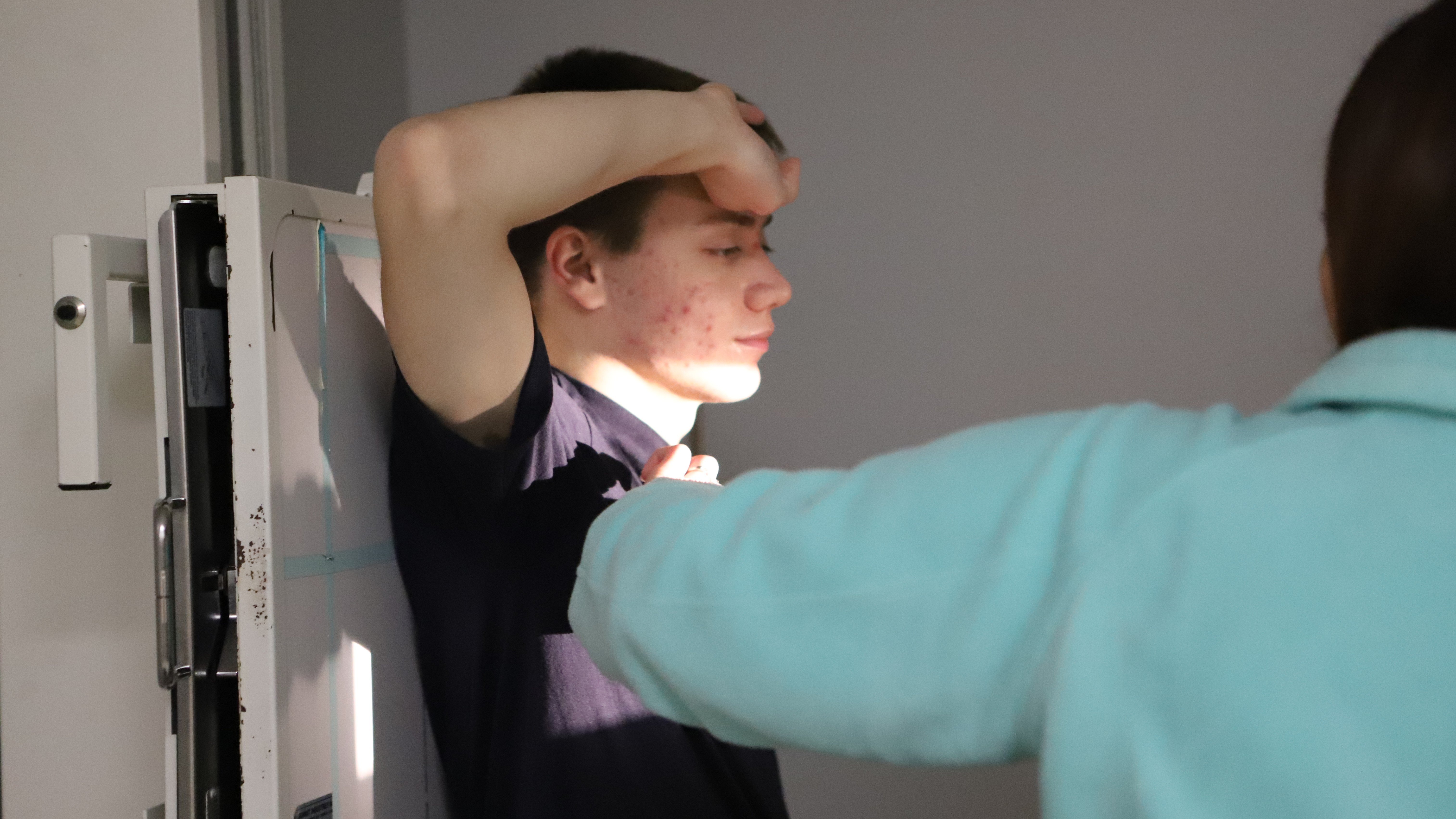
Key Takeaways:
- Newman University’s Radiologic Technology program accepts only 30 students from approximately 70 applicants annually, making it highly competitive
- Students complete extensive clinical training across multiple sites throughout Missouri, including rural settings
- The program maintains strong job placement outcomes, with graduates often receiving job offers before graduation
- Kansas Promise Scholarship can significantly reduce education costs for qualifying students who commit to working in Kansas for two years post-graduation
- The application deadline is March 1st, requiring a minimum 2.75 GPA in prerequisite courses
The field of radiologic technology offers exceptional job security and growth potential, but gaining admission to quality programs has become increasingly challenging. With healthcare demands rising and imaging technology advancing rapidly, prospective students face fierce competition for limited seats in accredited programs across the state.
High Competition Drives Program Selectivity
The numbers tell a compelling story about the popularity of radiologic technology careers. Each year, Newman University’s program receives approximately 70 applications for just 30 available spots—an acceptance rate that rivals many four-year universities. This 43% acceptance rate reflects both the program’s reputation and the growing awareness of radiologic technology as a stable, well-paying healthcare career.
The competitive landscape isn’t unique to Newman, but their program stands out for maintaining rigorous standards while achieving remarkable graduate outcomes. Newman University’s Radiologic Technology program has built its reputation through training that prepares students for immediate employment in diverse clinical settings. Program Director Jeff Vaughn notes that this competitive environment actually benefits students by ensuring only the most dedicated candidates enter the field.
The selection process involves more than just meeting minimum requirements. While the program requires only a 2.75 GPA in prerequisite courses, successful applicants typically exceed this threshold. The interview process, conducted in panel format during April after the application deadline, allows faculty to assess candidates’ communication skills, professionalism, and genuine commitment to the healthcare field.
What Sets Newman’s Program Apart
Extensive Clinical Training Hours
Newman’s program requires students to complete extensive hands-on clinical experience over five semesters, following a fall-spring-summer-fall-spring schedule that maximizes real-world exposure. The program’s structure recognizes that radiologic technology requires mastering specific competencies that can only be achieved through working with actual patients.
The extended timeline isn’t arbitrary—it reflects the unpredictable nature of healthcare. As Vaughn explains, the program must wait for patients to arrive naturally rather than forcing clinical scenarios. This approach ensures graduates possess genuine confidence and competency when they enter the workforce.
Multiple Clinical Sites Across Missouri
Students rotate through approximately half of the program’s clinical sites, experiencing everything from large urban hospitals to small rural clinics. This diversity exposes students to different patient populations, equipment types, and workplace cultures. Rural healthcare experience prepares graduates for diverse healthcare landscapes.
The variety of clinical settings—emergency departments, operating rooms, outpatient clinics, and specialty imaging centers—ensures graduates can adapt to any workplace environment. Students also gain experience with fluoroscopy examinations and portable imaging, developing the versatility employers value most.
Strong Graduate Employment Outcomes
Newman’s track record speaks volumes: graduates from recent years have secured employment, often before completing their final semester. Many students receive multiple job offers, with some advancing directly into specialized roles like CT scanning, cardiovascular imaging, or radiation therapy programs.
The program’s clinical partnerships frequently lead to permanent employment opportunities. Hospital administrators and imaging supervisors observe students throughout their rotations, essentially conducting extended job interviews. This relationship-building approach has resulted in graduates being hired into specialized positions typically requiring additional experience.
Application Requirements and Timeline
2.75 GPA Minimum in Prerequisites
The program requires completion of five prerequisite courses with a cumulative GPA of at least 2.75. While this threshold seems accessible, competitive applicants typically maintain GPAs well above the minimum. The prerequisite coursework provides essential foundations in anatomy, physiology, and basic sciences necessary for success in radiologic technology.
Applicants can receive conditional acceptance while completing final prerequisite courses during the spring semester before program entry. This flexibility allows students to strengthen their academic records while planning their transition into the intensive professional phase of training.
March 1st Deadline and Interview Process
Applications open in January with a March 1st deadline for fall admission. The program admits new students only once annually, making this deadline critical for prospective students. Applications may be accepted after March 1st if space is available.
Following application review, qualified candidates participate in panel interviews. The interview process helps faculty identify students most likely to succeed in the demanding clinical environment, assessing communication skills, professionalism, and motivation.
Kansas Promise Scholarship Reduces Costs
Two-Year Kansas Work Commitment Required
The Kansas Promise Scholarship offers significant financial assistance to qualifying students in high-demand healthcare fields, including radiologic technology. Recipients must commit to living and working in Kansas for two consecutive years following graduation—a requirement that aligns well with the state’s healthcare workforce needs.
This scholarship addresses both student financial concerns and Kansas’s healthcare staffing challenges. Given the excellent job market for radiologic technologists in Kansas, the two-year commitment rarely poses problems for graduates. Many find rewarding long-term careers within the state after fulfilling their obligation.
Last-Dollar Award After Other Financial Aid
The Kansas Promise functions as a “last-dollar” scholarship, covering remaining tuition costs after other financial aid applications. Students must maintain enrollment with courses counting toward degree completion, though additional coursework beyond the required credit hours is permitted.
For radiologic technology students, the 22-month program timeline fits well within the scholarship’s completion requirements. Students enrolled in Promise-eligible programs can maximize the financial benefit while building a strong academic foundation.
Career Outlook for Kansas Rad Techs
Projected 7% Growth Through 2030
Employment prospects for radiologic technologists in Kansas remain exceptionally strong, with projected growth rates of 7% through 2030—well above average for most occupations. This growth reflects aging populations, increased diagnostic imaging utilization, and technological advances creating new imaging applications.
The national outlook is equally promising, with approximately 15,400 openings projected annually across all radiologic and MRI technologist positions. Many openings result from workforce turnover as experienced technologists retire, creating advancement opportunities for new graduates.
Salary Range Varies by Source and Location
Kansas radiologic technologists earn competitive wages, with salary data varying significantly by source. The national median wage for radiologic technologists reached $77,660 in May 2024, providing a baseline for comparison across different markets.
Salary variations depend on factors including geographic location, facility type, shift differentials, and specialized certifications. Urban areas and specialized imaging centers typically offer higher compensation, while rural facilities may provide additional benefits like signing bonuses or tuition reimbursement.
Advancement Opportunities in Specialized Modalities
Radiologic technology serves as a foundation for numerous specialization paths. Graduates can pursue additional training in CT scanning, MRI, mammography, cardiovascular imaging, nuclear medicine, or radiation therapy. Some specializations require formal education programs, while others offer on-the-job training with certification requirements.
Career advancement isn’t limited to technical specializations. Experienced technologists often move into supervisory roles, education positions, or healthcare administration. The broad healthcare knowledge gained through radiologic technology training provides excellent preparation for diverse career trajectories.
Your Next Step: Preparing for Future Application Cycles
With the competitive nature of admission, prospective students should begin preparing well in advance of application deadlines. Successful applicants often shadow working technologists to confirm their career interest and demonstrate commitment during interviews. Many clinical sites welcome shadowing requests—simply call the radiology department to arrange visits.
Completing prerequisite coursework with strong grades remains the most important preparation step. Students should also consider the program’s demanding schedule and clinical requirements when planning their academic timeline. The five-semester commitment requires careful coordination with work and personal responsibilities.
The competitive nature of admission means early preparation provides significant advantages. Strong academic performance, relevant healthcare experience, and genuine understanding of the profession’s demands help applications stand out among the large applicant pool.
Prospective radiologic technology students can learn more about program requirements, curriculum details, and application procedures through Newman University’s healthcare education programs.
Newman University
3100 McCormick
Wichita
Kansas
67213
United States


